Airflow in Coffee Roasting: What It Is and How to Control It
Coffee roasting is not just about heat. A key factor that shapes the aroma, flavor, and color of the beans is the airflow inside the roaster. This airflow not only transfers heat by convection but also helps remove chaff and fine particles during the process, leading to a cleaner and more uniform roast.
What Is Airflow?
Airflow refers to the movement of air inside the roaster and how it interacts with the coffee beans. Although heat generates a natural airflow, the roaster operator can control and adjust it by regulating air temperature, speed, and pressure. These variables are interdependent and, when managed correctly, allow for a more precise and consistent roast.
How Heat Is Transferred During Roasting
During roasting, heat reaches the beans through three main mechanisms:
- Conduction: direct contact between beans and the drum or metal surfaces, contributing to sweetness and caramelization.
- Convection: hot air circulating around the beans, ensuring even heating and aiding in the removal of chaff and small particles.
- Radiation: thermal energy transferred by radiation—less significant than the other mechanisms but still present.
Airflow is the core component of convection, and adjusting it directly influences roast uniformity and flavor clarity.
Effects of Incorrect Airflow
Insufficient airflow: reduces convective energy, causing slow and uneven roasting. Beans may appear “baked,” with muted flavors and poor chaff removal.
Excessive airflow: can lead to overly rapid heating, surface scorching (tipping), and bitter flavors caused by accelerated roast development.
For this reason, controlling both the amount and speed of airflow is crucial to achieving a balanced cup with good flavor clarity.
Key Variables: Temperature, Speed, and Pressure
Airflow depends on three main factors:
- Air temperature: controls roast intensity and moisture removal speed.
- Airflow speed: influences convection efficiency and particle removal.
- Air pressure: closely tied to airflow speed; measuring it with a manometer allows precise adjustments, even in environments affected by smoke or oils.
Managing these variables enables roast profiling based on the characteristics of each batch and coffee type.
Adjusting Airflow Throughout the Roast
Keeping the same airflow throughout the entire roast is not recommended. A typical strategy includes:
- Start of roast: moderate airflow to promote heat absorption and Maillard reactions, avoiding overly rapid drying.
- Middle phase: gradually increasing airflow to remove free water and chaff, promoting even development.
- Final phase: adjusting airflow according to the desired profile, shaping aroma development and flavor clarity.
Different coffees require different approaches. For example, natural-processed coffees often benefit from lower airflow during the drying phase, increasing progressively toward the end to enhance sweetness and fruity notes.
Controlling Airflow for the Perfect Roast
Airflow is an essential roasting variable, just as important as temperature and time. Proper control achieves greater uniformity, flavor clarity, and consistency. Experimentation and note-taking are key to optimizing each batch.
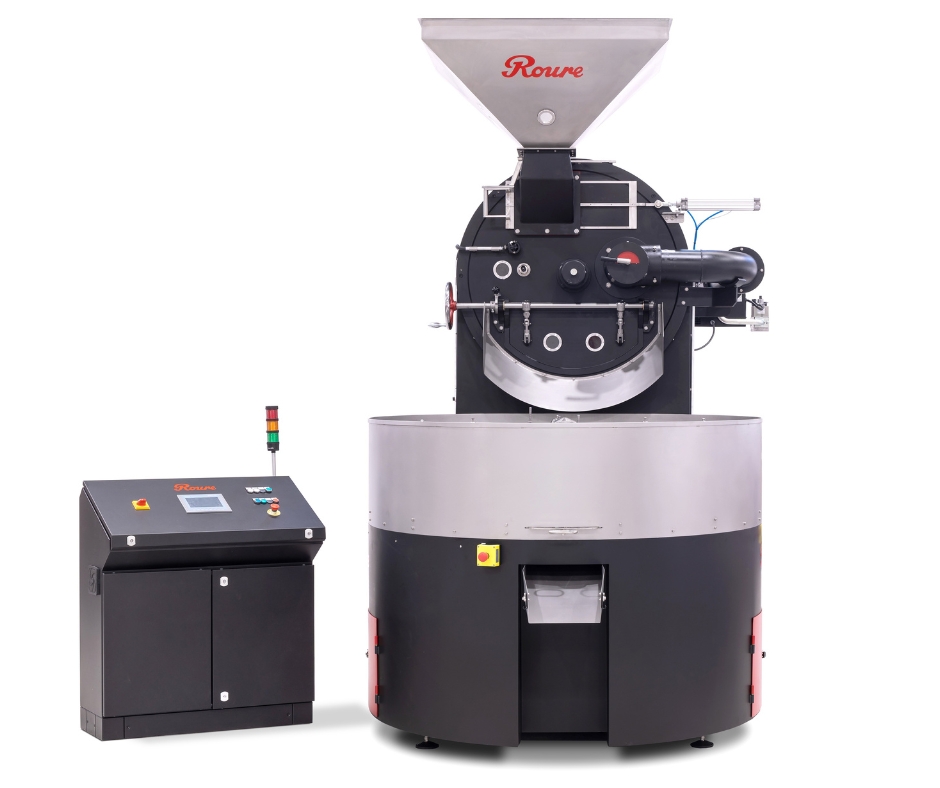
At ROURE, our roasters are designed to provide precise airflow control, helping roasters achieve consistent, high-quality profiles in every batch.